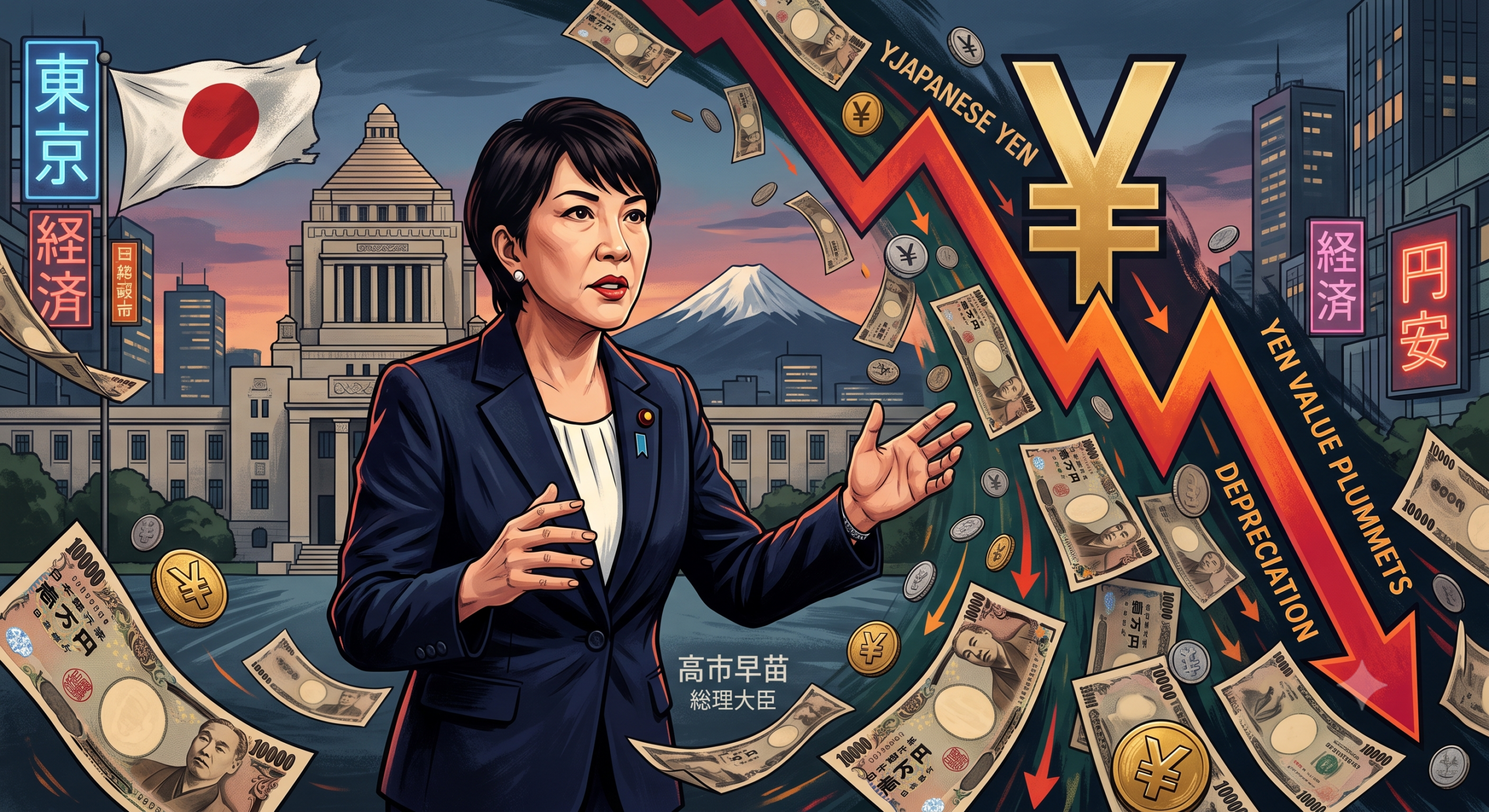
The recent shifts in Japan’s monetary policy and exchange rate fluctuations transcend a mere regional issue; they act as a massive catalyst capable of shaking the global capital markets and the fate of the U.S. economy. This analytical piece traces the macro narrative, stretching from the collapse of currency defense lines to the global ripple effects and Washington’s strategic dilemma in guiding Japan’s pivot.
1. Background: Why is Japan Facing 160-Yen Weakness and Rate Hike Pressures?
- The Trap of Ultra-Low Rates and Deflection Trauma: For decades during its “Lost Decades,” Japan battled severe deflation. To revive its economy, it maintained unprecedented ultra-low rates (negative interest rates) and massive quantitative easing.
- Structural Changes and Limits (The Meaning of the 160-Yen Line): However, as decades of stagnant prices and wages finally gave way to a “reflation” cycle, the widening interest rate gap with the U.S. pushed the yen down to the 160-per-dollar mark. This critical defensive line has cornered Japanese authorities by triggering soaring import costs and a cost-of-living crisis.
- Surging Probability of a September Rate Hike: No longer able to overlook ultra-low rates, the Bank of Japan (BOJ) has entered a normalization path. Bond and swap markets have priced in an 80%+ probability of a rate hike at the upcoming September policy meeting.
2. Development: What Happens If Japan Enters a Full-Fledged Rate Hike Cycle?
- The Massive Unwinding of the Carry Trade: Global investors have long borrowed cheap yen to fund investments in U.S. and high-yielding assets (the yen carry trade). If the BOJ hikes rates, this massive funding pipeline reverses, triggering a “liquidation storm” as capital deployed worldwide rushes back to Japan.
- The Reality and Truth Behind the “U.S. Treasury Sale” Rumor: Markets often worry that if Japan faces economic hardship, it could dump U.S. Treasuries to shake the markets. Theoretically, Japan is one of the world’s largest holders of U.S. debt.
- Verifying Execution Viability: If Japan dumped U.S. Treasuries en masse, U.S. bond yields would spike and severely damage the U.S. economy. Simultaneously, however, a flood of dollars released into the market would cause the yen to skyrocket (extreme appreciation). With exchange rate defense as its top priority, an explosive surge in the yen would bankrupt core export giants like Sony and Toyota, dealing a fatal blow to Japan’s domestic economy. In short, it is a “suicidal self-harm” card that is virtually impossible to execute.
3. Washington’s Stance: Navigating a Strategic Dilemma While Encouraging the Pivot
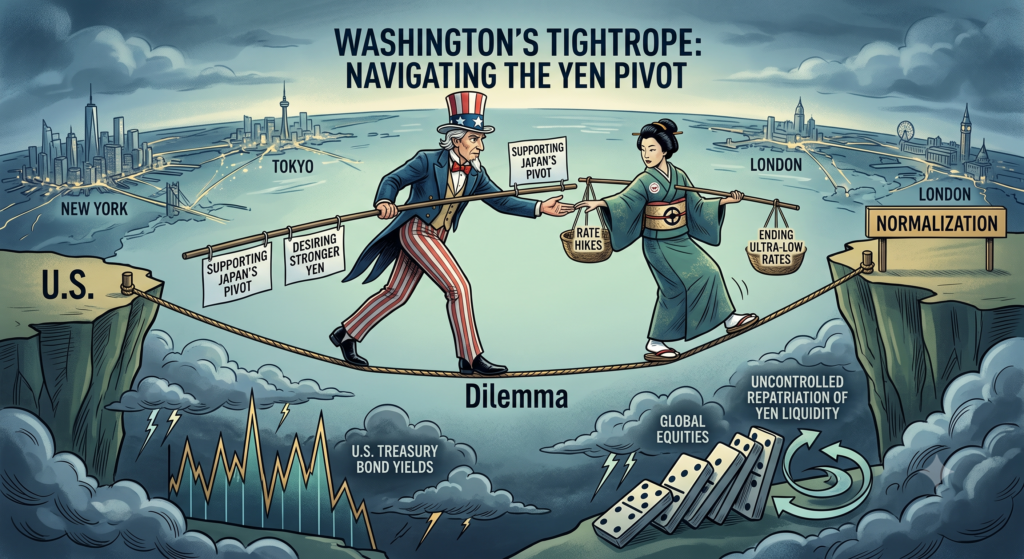
- America’s True Intentions — Welcoming Japanese Rate Hikes and a Stronger Yen: The U.S. implicitly and strongly desires Japan to execute a painful pivot, ending ultra-low rates and weak-yen policies. Excessively weak yen have fueled a “super-dollar,” undermining the price competitiveness of U.S. exporters and distorting global currency markets. The U.S. Treasury and authorities have pressured Japan behind the scenes for this exact normalization.
- Washington’s Dilemma — Managing the Side Effects of an Abrupt Pivot: The problem arises if Japan hikes rates too aggressively. An abrupt BOJ pivot could trigger an uncontrolled repatriation of global yen liquidity, rocking the U.S. Treasury market or sparking a transient shock in global equities.
- A Delicate Tightrope Walk for a Soft Landing: Thus, while welcoming and supporting Japan’s rate hikes, the U.S. faces a sophisticated strategic dilemma: coordinating exchange rates and managing liquidity to ensure that the process avoids spiking U.S. bond yields or crashing global financial systems.
4. Final Impact: Consequences for the U.S. and Global Economies
- Contraction of Global Liquidity and Amplified Volatility: Japan’s pivot signals the definitive end of the “free money” era across global funding markets. As global leverage—sustained by cheap yen—contracts, downward pressure will mount heavily on risk assets like equities and commodities.
- Pressure on U.S. Capital Markets and Bond Yields: As Japanese institutional capital responds to rising domestic bond yields by liquidating U.S. assets and repatriating funds, weakening U.S. Treasury demand could push up U.S. long-term yields (depressing bond prices). This drives up domestic mortgage and corporate borrowing costs, pressuring the U.S. real economy.
- Directional Shift in the USD/JPY and Shocks to Emerging Markets: While the BOJ’s hawkish stance will curb the 160-yen baseline and defend the currency, shifting global dollar index dynamics will export imported inflation to emerging markets pegged to the dollar, setting off a chain reaction of shocks.
💡 Editor’s Note The defense of the 160-yen line and the impending September BOJ rate hike represent a painful transition where a pillar of global finance, long sustained by cheap liquidity, is forcibly normalized. Amid the Fed’s tightening cycle, the U.S. must walk a delicate tightrope—encouraging Japan’s rate hikes while maintaining currency coordination and control to prevent spikes in Treasury yields or a global financial shock. Investors must strip away leverage and migrate portfolios toward sound fundamentals through this macro tectonic shift.
This article was conceptualized and rigorously fact-checked by the author. Google AI tools were utilized to assist in generating the visual assets and structuring the initial draft, ensuring a highly polished reading experience.